

Puffing Peacemaker
On the Pacifism of the Rev. W. V. Awdry
Expanded from material originally written for the June ‘25 edition of The Anglican Peacemaker, the official publication of the Anglican Pacifist Fellowship.
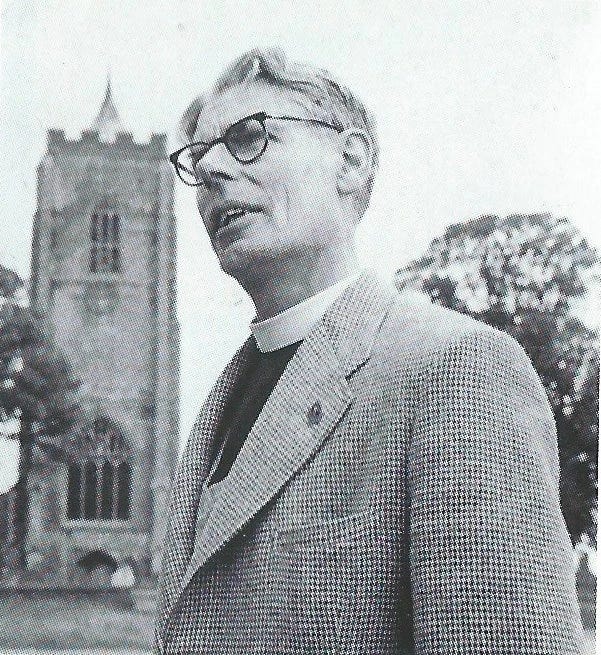
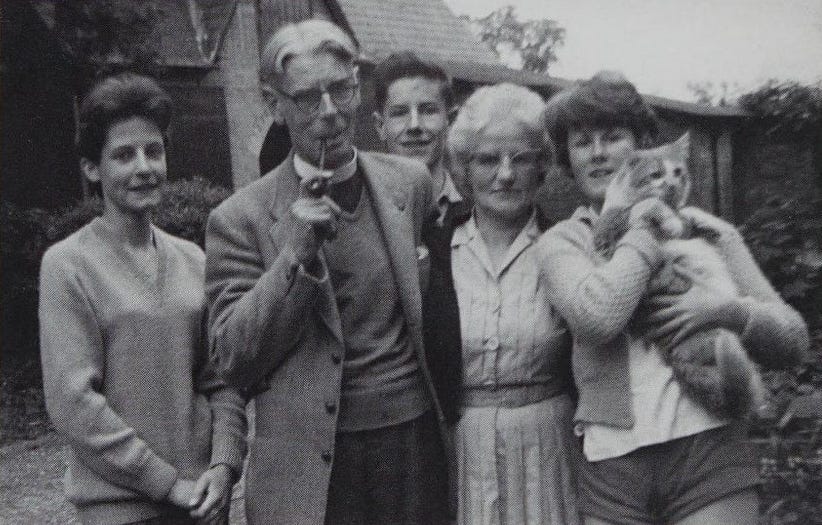
As an individual, the Rev. Wilbert Awdry has not been subjected to the same level of academic analysis as other literary luminaries such as Beatrix Potter, J. M. Barrie, and A. A. Milne. The same cannot be said for the creation that has won Awdry his literary immortality, as well as a number of epithets such as ‘the Vicar of Talking Trains,’ and ‘the Thomas the Tank Engine Man.’ Both Thomas the Tank Engine and the literary canon from which he hails, The Railway Series, have been scrutinized on the bases of gender issues, class issues, race, sex, and more. Such work is laudable, but more popular treatments of Awdry’s work directly invoke his background, and especially his clerical calling, in ways that border on the presumptuous and the inaccurate. One article for The New Yorker described Awdry as one who “disliked change, venerated order, and craved the administration of punishment,” linking this to Awdry’s holy orders.[1] Another article from the Daily Mail was more positive, but characterized Awdry as a “grumpy vicar.”[2] Even Awdry’s most popular nickname – ‘the Puff Puff Parson’ – began as a title of derision. Varied as they are, these perspectives share a common element, as they recognize the primacy of the Christian faith and priestly vocation in the life of the Rev. Wilbert Awdry.
If the reader should wonder what any of this has to do with the Anglican Pacifist Fellowship, then the question itself may well reflect the need for a renewed consideration of Awdry’s life. Awdry was not only a committed priest in the Church of England, but a determined pacifist and ecumenist. Among the earliest members of the APF, Awdry’s commitment to the belief that war should never be the solution resulted in his being ejected from his curacy in one parish, and denied another parish altogether. This position was not a marginal element of his faith. Rather, it was one of the key elements of the faith of a clergyman who came to his faith and calling between two world wars. While the Rev. Wilbert Awdry may rightly be regarded as a figure of lighthearted children’s stories, he also stands as a quiet, determined witness to the necessity of peacemaking as part of the Christian life, and a model of the “ministry of reconciliation.”
“Brother’s Twopence” and the Roots of Awdry’s Pacifism
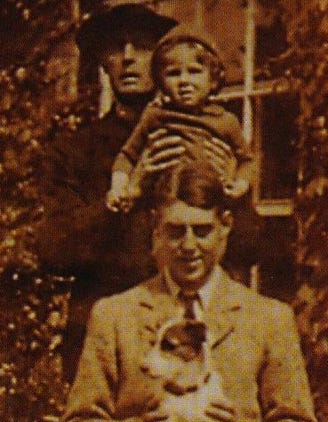
Born on June 15th, 1911, Wilbert Awdry was born into a family well-acquainted with the life of the Church. Awdry’s father, the Rev. Vere Awdry, was the beloved Vicar of Ampfield. Vere’s brother, the Rt. Rev. William Awdry, was not only the inaugural Bishop of Southampton, but also served as a Bishop in the Nippon Sei Ko Kai (the Anglican Episcopal Church in Japan) in the dioceses of Osaka and South Tokyo. Both men would remain lifelong influences for Wilbert. There was another role model for Wilbert among his family: his older brother Carol. Despite being seventeen years older than Wilbert, the bond between the two was almost instant. Carol was one of Wilbert’s godparents, and a frequent pastime found the young Wilbert going for rides on Carol’s bicycle. Their mother Lucy recorded that one of Wilbert’s nicknames for himself was “Brother’s Twopence.”[3]
It was not to last. As with so many families throughout Britain, this tranquility was shattered by the First World War. Carol Awdry became a Second Lieutenant with the Royal Munster Fusiliers; for Vere, it was the culmination of a frustrated dream, having planned to go into the army before his family encouraged him to become a solicitor.[4] This joy was short-lived, as Carol was killed at the age of twenty during the retreat from Mons. The Rev. Wilbert Awdry later reflected that “it was the supreme tragedy of my father’s life.”[5]
Biographer Brian Sibley noted that “the ghost of that brother would haunt Wilbert for many years as he strove to measure up to the idealized hero-figure.”[6] The memory of Carol and his father’s grief would doubtless shape Awdry’s response to one of his first ministerial crises – the outbreak of the Second World War. Ordained to the diaconate in 1936, and the priesthood in 1937, Awdry’s first major work was as the curate of the Rev. Percival Sexty, in Great Cheverell, Wiltshire.
A Curate’s Quiet Stand – from Salisbury to Birmingham
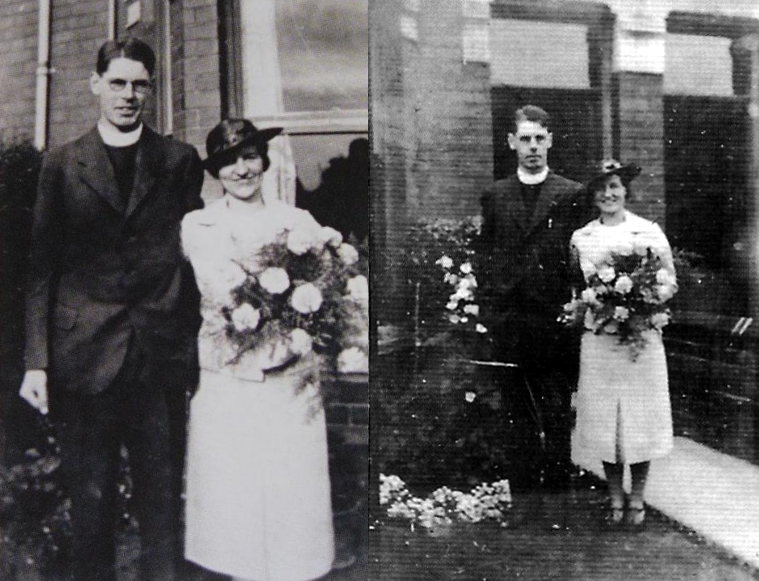
The relationship between Awdry and Sexty soon proved to be a strained one. To his curate’s credit, Sexty could not accuse Awdry of a lack of productivity. By now, he was married to Margaret (née Wale) whom he had met as an educator in Jerusalem, and had demonstrated himself as a capable curate and evangelist in Odiham. Having been a member of the Toc H organization in Jerusalem, Awdry successfully established a branch in his new parish. Rather, the issue concerned the question of war.
Awdry would not be dissuaded from his doubts surrounding a ‘just war.’ The memory of Carol could not be dismissed that easily. In a letter to his college tutor, the Rev. Julian Thornton-Duesbery, Awdry explained that “We have been pacifists since 1937.”[7] Awdry’s belief had not been taken up amid the outbreak of the war. Rather, Awdry appears to have been among the first members of the Anglican Pacifist Fellowship after its organization in 1937 by Archdeacon Percy Hartill. [8] Awdry refused to condemn wholesale those who did feel compelled to engage in the war, however. “Every soldier has got a soul and if he joins up in a belief that what he is doing is right,” Awdry argued, “that may, indeed, be the right thing for him. I simply couldn’t be sure that it was the right thing for me.”[9] Even so, Awdry was determined in his refusal to countenance war. Biographer Brain Sibley notes that Awdry “remained … firm in his conviction that mankind ought always to view war as an unacceptable option.” Echoes of this stance may be seen as far back as 1933, as Sibley notes that Awdry was studying at Wycliffe Hall when the Oxford Union famously declared it would “under no circumstances fight for its King and Country.”[10]
Awdry’s views had been known to the Rev. Percival Sexty before the war. Now that war had come, Sexty issued his curate an ultimatum – either serve as a military chaplain, or leave the parish by September 14th, 1940. Awdry, rather tired of Sexty’s treatment, was initially more than happy with the latter arrangement. The young curate believed his troubles to be over when he found a position at a church in Salisbury, only to be denied the post by the Rt. Rev. Ernest Neville Lovett. Bishop Lovett, like Sexty, was opposed to pacifism. One of the few writers to consider Awdry’s pacifism at length, Owen Dudley Edwards, characterized Awdry’s treatment by the clergy of the Diocese of Salisbury as “bullying and abuse,”[11] a description particularly apt in light of the fact that Margaret Awdry was pregnant during this time. Their first child, Christopher, was born just two months prior to the date of the Awdry’s proposed eviction.


The Awdry family did not have to suffer this ignominy thanks to the intervention of the Bishop of Birmingham, the Rt. Rev. Ernest Barnes. Bishop Barnes and Canon Thomas Sheldon sympathized with Awdry’s dilemma, and found him a curacy with Sheldon in King’s Norton, Birmingham. Awdry was not only delivered from his plight, but to some extent vindicated. Sexty could not accuse Awdry of cowardice when he was being sent to a diocese subjected to aerial raids, as the Birmingham Blitz had begun in August 1940. Awdry later said that the good news from the Bishop of Birmingham came “out of the blue, when I was rather down in the dumps and unsure what to do.”[12] One may well see this as a providential move, as Awdry did – it was in King’s Norton that the Railway Series began to be written, which would come to allow Awdry to better provide for his family.
A Peacemaking Legacy – Learning from the Rev. Wilbert Awdry
Many would later remark that the Rev. Wilbert Awdry was a personality marked by a balance of tolerance and determination. While Awdry felt that war was immoral, this did not stop him ministering to those who felt differently. Awdry’s membership in the APF appears to have been concurrent with his organization of the Toc H branch in Odiham, “with the aim of integrating the RAF personnel into the life of the village.”[13] Awdry’s appeal that “every soldier has got a soul” was not an individualistic approach to the question of war, but emerged from a lived experience of ministering to those of a different opinion and station than his own. Another example may be found in Awdry’s own family. Awdry’s brother, George, had been involved in the Second World War, having been put to work with his knowledge of the German language. If there were any strain on the relationship, it had been sufficiently resolved to allow the brothers to collaborate on future literary endeavors. This attitude of reaching out across differences extended to those with whom Awdry found himself at odds. Although Percival Sexty barred Awdry from any preaching for fear of pacifist sermons, Awdry later said he would never have attempted this out of loyalty to Sexty – who was not only Awdry’s vicar and superior, but had been his chaplain in adolescence at Dauntsey’s School in Wiltshire. In the words of Canon Poole’s Litany of Reconciliation, Awdry sought to avoid “that pride which leads us to trust in ourselves, and not in God,” and “that hatred which divides nation from nation, race from race, class from class.”
Nevertheless, Awdry could not close his eyes to “that indifference to the plight of the imprisoned, the homeless, the refugee,” and all those threatened by warfare. The twenty-nine-year-old curate demonstrated a remarkable resolve as he remained firmly convinced of the unacceptability of war, even when his reputation in the parish of Great Cheverell was “down with the wines and spirits!”[14] With Awdry’s unwillingness to castigate those who disagreed with him, it was a quiet determination – quite literally, given that his family knew nothing until Brian Sibley’s research into Awdry’s history for his 1995 biography. For his part, Awdry reasoned this would have been unnecessary – “I did not tell my children because the war was over, by then.”[15]
At the same time, it was a stubborn determination, refusing to yield to pressure, and one that emerged from the same faith that fueled much of the drama in his stories for children. These were stories of chaos resolved, derailments cleared, and friendships reconciled. Awdry did not intend for his stories to be evangelical tracts. If anything, they were a reaction to “Sunday readings” that the Awdry children had been weaned on, with “children so horribly good you wanted to smack them.”[16] Nevertheless, the Railway Series operated with a Christian morality, and one that quietly emphasized peacemaking and reconciliation. “This world,” Awdry would explain, “is God’s world, and we cannot choose to disobey him and live happily our way. … We all make mistakes; but if we express our sorrow, God’s forgiveness is complete.”[17] In the language of his Railway Series, however, Awdry would always conclude, “They may be punished … but they are NEVER ‘scrapped!’”[18]
The Rev. Wilbert Awdry found that he could not disobey what he understood to be one of God’s fundamental rules – "Blessed are the peacemakers: for they shall be called the children of God." (Mt. 5:9) For Awdry, it was pure Christianity, and nothing less than his affirmation of the vow he had made as a priest, having been asked to “maintain, and set forwards, as much as lieth in you, quietness, peace, and love, among all Christian people.”[19] Awdry did so with a tolerance for those who disagreed, and yet with a faithful determination, trusting that God actively seeks peace in our hearts, as well as in the world around us – in short, nothing less than loving one’s neighbors, loving one’s enemies, and loving the God who made them all. Awdry’s witness was one of quiet but determined Christian discipleship. It is an example that continues to present a challenge to the faithful, commending the way of peacemaking even at potential costs to our personal life. Awdry’s witness is a stark reminder of the challenges found in this work of peacemaking, and in learning to remain faithful in the face of one’s enemies as well as one’s neighbors.
[1] Jia Tolentino, “The Authoritarian, Repressive Soul of Thomas the Tank Engine,” The New Yorker, 28 September 2017.
[2] Nicolas Jones, “Why the Grumpy Vicar who created Thomas the Tank Engine ended up HATING him,” The Daily Mail, 7 January 2010.
[3] Brian Sibley, The Thomas the Tank Engine Man: The Life of Reverend W. Awdry (Oxford, England: Lion Hudson, 2015), 45.
[4] Valerie Grove, “The Church Mouse and His Millions,” The Times, 17 December 1993.
[5] Sibley, Tank Engine Man, 44.
[6] Sibley, Tank Engine Man, 45.
[7] Sibley, Tank Engine Man, 98.
[8] Sibley, Tank Engine Man, 96.
[9] Sibley, Tank Engine Man, 97.
[10] Sibley, Tank Engine Man, 99.
[11] Owen Dudley Edwards, British Children’s Fiction in the Second World War (Edinburgh: Edinburgh University Press, 2007), 405.
[12] Sibley, Tank Engine Man, 99.
[13] Sibley, Tank Engine Man, 90.
[14] Sibley, Tank Engine Man, 98.
[15] Stephen Pile, “Is Thomas Going Off the Rails?” The Daily Telegraph, 27 February 1995.
[16] Frances Welch, “Fat Controller Waits at the End of the Line,” Me and My God, The Sunday Telegraph, 27 November 1994.
[17] Sibley, Tank Engine Man, 355; Welch, “Fat Controller Waits at the End of the Line.”
[18] Sibley, Tank Engine Man, 355.
[19] “The Form and Manner of Ordering of Priests,” The Book of Common Prayer and Administration of the Sacraments and other Rites and Ceremonies of the Church according to the use of the Church of England (Cambridge), 577.